
East Moline Previous Resident Sources
East Moline previous residents do not appear in one continuous roll. Current parcel data supplies the PIN, situs address, owner label, legal description, tax year, and sometimes a prior PIN. The Recorder of Deeds then carries the ownership trail into records dating to the mid-1800s. Directory and newspaper sources add the people who occupied or were linked to the property, while maps and permits explain changes to the building and block.
| Source | Years It Covers | Where Held | What It Shows |
|---|---|---|---|
| Recorded deeds | Mid-1800s onward | Rock Island County Recorder | Owners, instruments, legal descriptions |
| Regional city directories | Verified leads include 1926, 1928, 1934, 1937, and 1938 | FamilySearch, RICHS, and area libraries | Named household snapshots and addresses |
| Digitized newspapers | 1857 to present at RICHS | RICHS archive | Sales, deaths, visits, and address clues |
| Probate and court series | Probate begins in 1835 in IRAD catalog | IRAD and Circuit Clerk | Estates, heirs, and court references |
| Building permits | No public start year stated | East Moline iWorQ and FOIA | Dated work, permit type, and status |
Start with deeds for a chain of owners. Use directories, census records, and notices when the real question is who occupied the place. For an early address, retain the lot, block, subdivision, and old municipality terms because a modern house number may not be the key used in the older index.
Anchor East Moline Past Residents
The Rock Island County Devnet search accepts PIN, owner, address, sale date, township, district, property class, and tax year. A parcel card can show both current and previous PIN data, a legal description, exemptions, taxing districts, and tax links. Record the year displayed with every result because the live file changes.
The public library parcel at 745 16th Avenue shows why labels matter. Its site address is the library, its owner is the East Moline Library Board of Trustees, and the tax-bill mail goes to City Hall. That combination does not identify a household. It teaches the key rule for tracing past residents: a named owner or mailing addressee is evidence of title or tax administration, not proof of who slept at the property.
The county assessment entry page warns that the public file is working data and bars automated retrieval. Search individual parcels, save the exact PIN and legal wording, then use those fields in the next record system. If the web record is unclear, inspect the card through the County Assessment Office or the Hampton or South Moline township assessor.
Trace East Moline Deed Owners
The Rock Island County Recorder of Deeds keeps deeds, mortgages, releases, liens, easements, plats, surveys, and other recorded instruments. Its official page links to Laredo and Tapestry, but the exact online cutoff and live vendor fields were not verified. The office says its land records date to the mid-1800s, so the counter and written-request routes remain essential for early East Moline property history.
- Copy the current owner, PIN, and full legal description from Devnet.
- Find the deed by which that owner took title and note the grantor, date, and instrument reference.
- Search that grantor as an earlier grantee to locate the prior purchase.
- Repeat the handoff, checking that the lot, block, subdivision, or metes-and-bounds description still matches.
- When the vendor search stops, request the index or deed at the Recorder counter, by mail, or by fax.
- Grantor and grantee
- The grantor gives an interest; the grantee receives it.
- Chain of title
- The linked series of recorded transfers for the same land.
- Legal description
- The lot, block, subdivision, or boundary wording that identifies land even when a street label changes.
- Criss-cross directory
- A directory arranged by address or phone number rather than only by surname.
- Enumeration district
- The small area assigned to one census taker, useful for locating a household when an address index fails.
The Recorder is at 1504 Third Avenue, second floor, Rock Island, with phone 309-558-3360 and fax 309-558-3642. Staff do not supply ownership, prices, liens, or releases by phone. Use the counter, mail, or fax for a defined document request. This county-seat fallback is part of the East Moline previous resident search, not a separate detour.
East Moline Previous Deed Access
Laredo and Tapestry are the county-linked vendor routes. Their live search fields, payment behavior, and exact coverage could not be inspected during research. Do not assume a blank vendor screen means no deed exists. The official document-information page provides the counter, mail, fax, and email alternatives.
View the county-linked Laredo access page.

The captured vendor page is an access point, not proof of coverage, so keep the Recorder's offline routes in the workflow.
View the county-linked Tapestry portal.
Tapestry may serve occasional searches, but the research did not verify its live fields or earliest online year.
East Moline Past Record Copies
The Recorder fee schedule, effective February 1, 2025, lists photocopies at $0.50 per page, certified copies at $49, file-stamped documents at $2, mail requests at $5, and email requests at $2 plus copy cost. The separate document-information page describes fax replies at $3 plus $1 per page, prepaid. Confirm the current charge before ordering. Use a plain copy for working notes and certification only when official authentication matters.
Check the current Rock Island County Recorder fees.
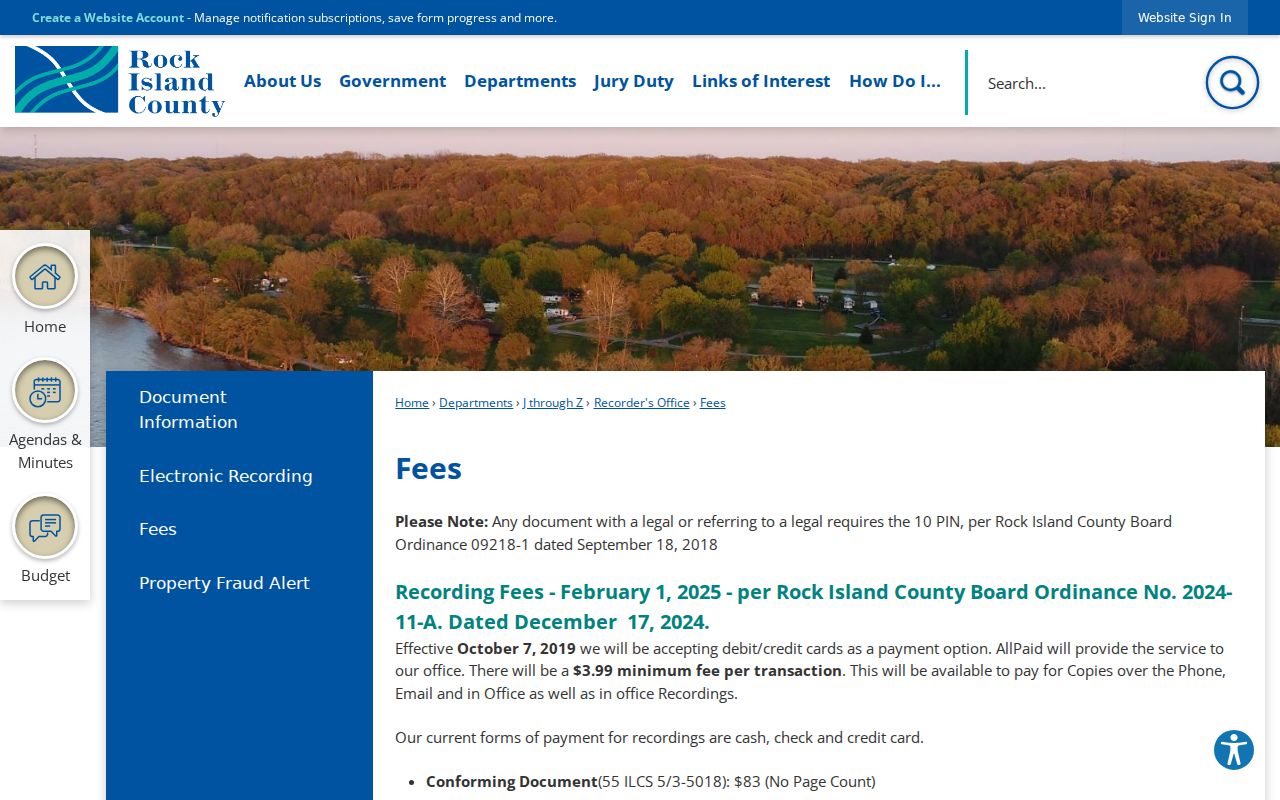
The fee page helps budget a document-by-document chain and should be checked again before a copy order is sent.
Open the Recorder's document and copy guidance.
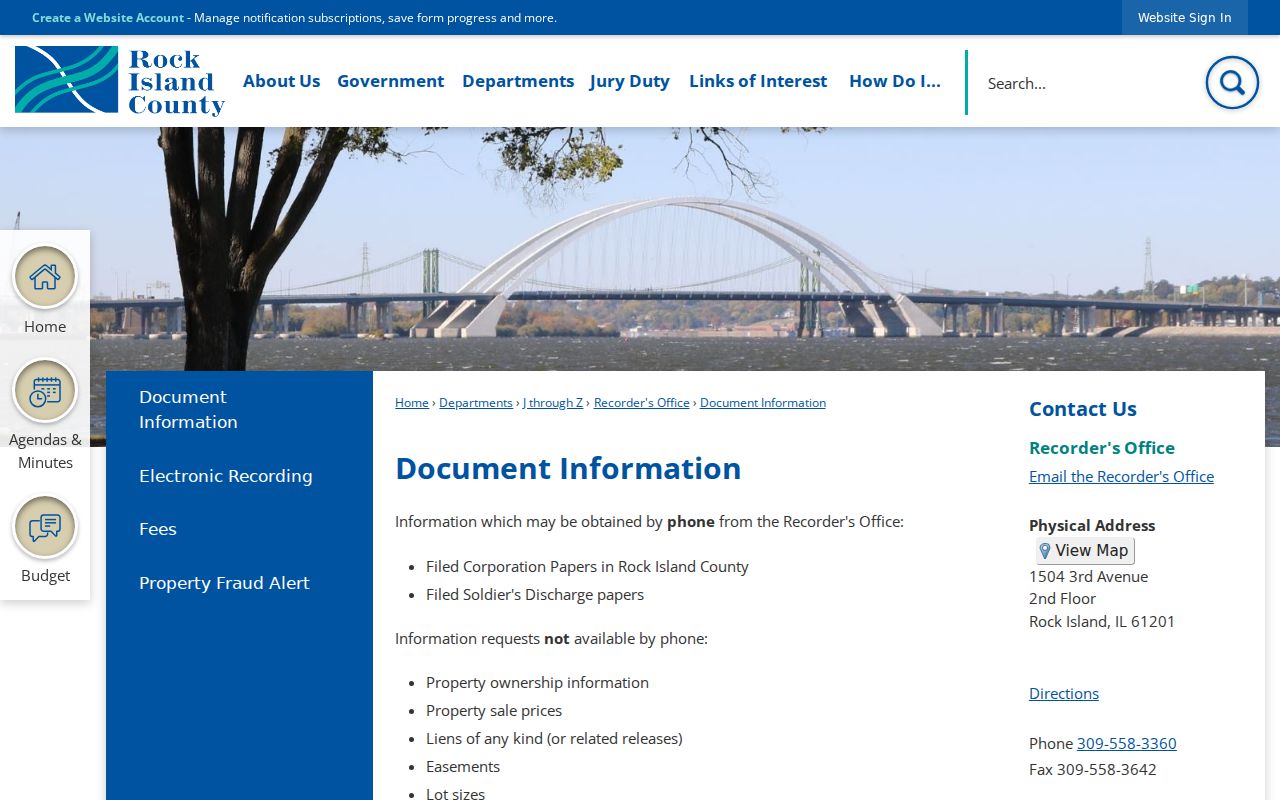
The captured page makes clear that a precise instrument or book-and-page reference is far more useful than a broad request for all prior residents.
East Moline Past Address Clues
A lot and block can survive when a street address does not. A 1910 newspaper lead records R. B. Rose to C. J. Garrett, lot 14, block 189, for $350. That item is not a substitute for the deed. It is a test case: carry the lot and block into the Recorder index, compare later plats and legal descriptions, and determine whether the land links to a present parcel.
The county GIS began aerial and soil work in 1996 and converted paper parcel material to digital form starting in 1998. The map helps locate a current PIN and adjoining geometry. The recorded plat or deed remains the legal source. If a parcel split, also note a previous PIN and compare each legal description before joining two names into one ownership chain.
Note: No verified East Moline street-renumbering table was found, so use documented parcel and place-name links instead of guessing at number changes.
Watertown Names East Moline Residents
Historical geography can change the search term. East Moline's official history says Watertown was platted in 1856, became a village in 1905, and voted to join East Moline in 1914. Port Byron Junction or Rock Island Junction, near present 9th Street and 14th Avenue, can also appear in older context. Search the name used at the record's date.
This is the page's strongest local story. A failed search for East Moline previous residents may succeed under Watertown, a regional Rock Island-Moline title, a subdivision name, or a lot-and-block description. Preserve the old wording in notes. Do not silently replace it with today's postal city, because the old label explains where and why the record was filed.
East Moline Past Household Sources
The verified 1934 R.L. Polk regional directory explicitly includes East Moline, Silvis, and Milan in its 1,056 pages. Other researched catalog leads include 1926, 1928, 1937, and 1938. Access varies, and a catalog record does not prove every page is freely viewable. The full collection context belongs in the East Moline city directory resource.
The RICHS digitized newspaper archive covers newspapers from 1857 forward and supports terms, a second AND term, place and title filters, and date bounds. RICIGS newspaper abstract indexes span 43 volumes and can point to births, marriages, deaths, estates, divorces, visits, and other notices. Complete abstracts may require membership.
For probate, the IRAD Rock Island probate index uses last, first, and middle-initial name searching. The IRAD catalog lists probate from 1835 to 1900 and other county court series. Try spelling variants and then ask the depository about access to the underlying file.
East Moline Past Address Evidence
The Library of Congress Sanborn catalog files the relevant map under Moline while its original-place note names East Moline and Silvis. Sanborn sheets show structures and block context, not residents. Pair their footprints with an address, legal description, deed, or directory entry before drawing a conclusion.
East Moline's iWorQ permit system offers an existing-permit route with permit number, contractor, start date, and end date fields. Results can show permit number, type, status, inspection request, and view controls. No public index start year was published. Search the East Moline Archive Center by keyword, category, time period, or date range, then use a focused Illinois FOIA request for older permit or code files that are not online.
Confirm East Moline Past Households
Ownership is only half of an East Moline previous resident trail. A city directory is a dated snapshot and may name a householder, spouse, work, or street address. A census schedule can show a household on one enumeration date. Newspapers, obituaries, and probate records may explain a move, death, sale, or family tie. No one source proves continuous occupancy.
- Place each directory entry on a timeline with the printed year and exact address.
- Compare the nearest available census schedule, accounting for the federal release rule.
- Search newspapers for the surname plus address, old municipality, or lot and block.
- Use probate or vital indexes to test a death or heir lead, then request a copy only if eligible.
When sources disagree, keep both readings and their dates. A directory may lag a move, a deed may show only title, and a tax mailing address may belong to an office. The best conclusion states what each record actually says.
Lawful use. Research East Moline previous residents for house history, genealogy, or personal curiosity. Never use an address trail to track, harass, threaten, or harm a living person.